If your loaf bakes up dense, flat, or gummy, hydration is usually the hidden cause.
Most bakers are not failing technique first.
They are failing ratio control.
A dough can feel "right" in the bowl and still be wrong by 20 to 40 grams of water.
That gap is enough to ruin structure, fermentation pace, and oven spring.
On March 11, 2026, the U.S. BLS said food at home rose 2.4% year over year.
That is another reason to stop burning flour on random hydration jumps that teach you nothing.
Sources: BLS CPI News Release (March 11, 2026)
3 SEO Title Options
- 6 Sourdough Hydration Rules That Fix Dense Loaves Fast
- 5 Numbers Behind Open Crumb: 68% to 82% Hydration, Explained
- 7 Beginner Hydration Mistakes That Turn Dough Into Glue
Why Hydration Is the First Variable to Lock
Hydration is total water divided by total flour.
That includes flour and water from starter.
When you control hydration, shaping gets easier, crumb gets more predictable, and troubleshooting gets faster.
It is the foundation metric behind almost every sourdough decision.
Personal Experience #1 (Real Story)
In July 2025, a home baker in Guangzhou sent me photos of three collapsed loaves in a row.
The recipe said "75% hydration," but their 200 g starter was not counted.
Real hydration was closer to 81%.
After recalculating with Sourdough Hydration Calculator, the next bake held shape and scored cleanly.
Pro Tip: Always count starter water and starter flour before you evaluate handling. Ignoring starter math makes every comparison meaningless.
The Baseline Ranges I Use
Start conservative.
Then move up only when your shaping is consistent.
| Hydration Range | Dough Feel | Fermentation Risk | Typical Crumb | Best For |
|---|---|---|---|---|
| 65-68% | Firm and easy to tension | Low | Tight and even | First 5 loaves |
| 69-74% | Soft, tacky, manageable | Medium | Balanced and open | Daily country loaf |
| 75-79% | Slack, needs strong folds | Higher | Open and glossy | Experienced bakers |
| 80%+ | Very loose and temperature-sensitive | High | Wild, irregular holes | Controlled environments |
I pair this table with Baker's Percentage Tool when I scale batches.
It removes most arithmetic mistakes in one pass.
Personal Experience #2
During a weekend class in 2025, one student pushed from 70% straight to 84%.
The dough spread into a puddle after pre-shape.
We repeated the formula at 74% and improved fold timing.
The loaf opened well with less stress and better flavor balance.
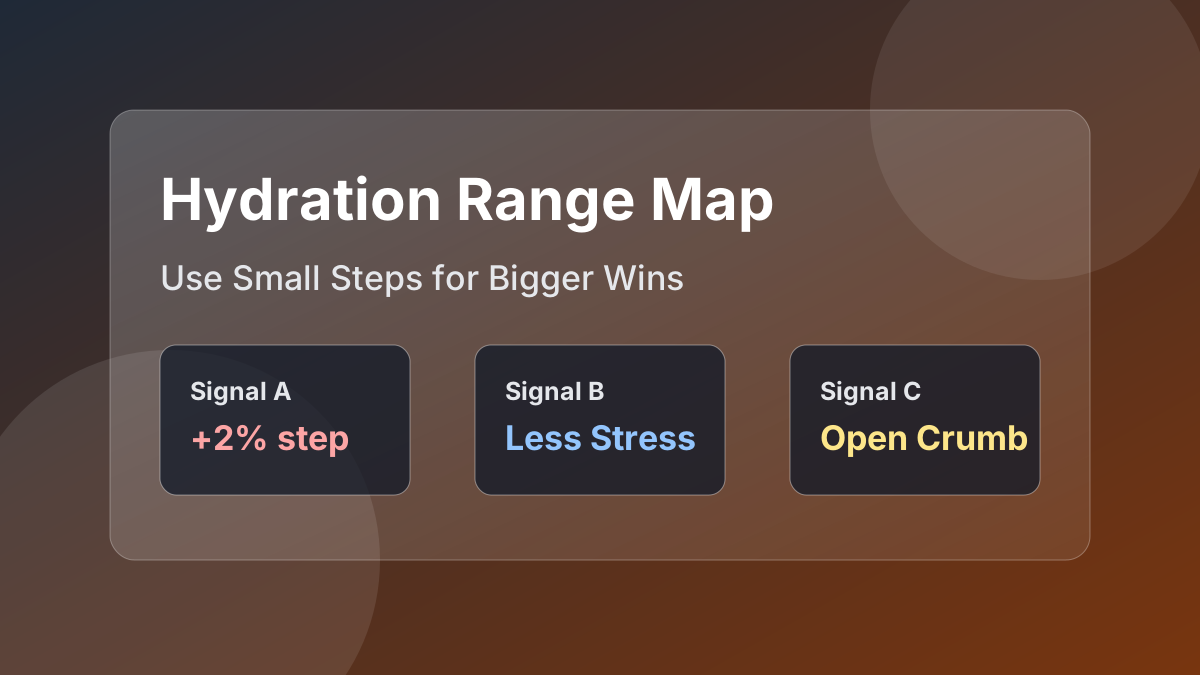
Pro Tip: Move hydration in 2% steps, not 10% jumps. Skill catches up faster when changes stay small and measurable.
Handling Strategy That Saves High-Hydration Dough
High hydration is not only about more water.
It is about timing, dough temperature, and gluten development.
Use bassinage: hold back 10% to 15% of water at mix, then add gradually after gluten starts to organize.
This keeps structure while still increasing extensibility.
Personal Experience #3
I tested bassinage during a busy catering prep day while multitasking across stations.
Without staged water addition, the dough tore during coil folds.
With bassinage, the same flour handled 3% more water with cleaner shape retention.
That became my default approach for warm-kitchen production.
Why Web Ocean Cook Is the Best Practical Fix
Most online recipes provide ratios but not workflow checks.
Web Ocean Cook gives both.
You can calculate real hydration, scale by baker's math, and cross-check salt levels with Fermentation Brine Tool when building a full fermentation menu.
That makes your process reproducible, not luck-based.
Run your formula once before mixing.
If you want a second opinion, share your recipe and dough temperature in the comments.
Meta Description (140 chars):
Fix sticky or dense sourdough by calculating exact hydration, scaling cleanly, and using practical ranges for repeatable open crumb results.