Your bar budget can vanish in one bad purchase order.
Buy too much and you pay for unopened bottles.
Buy too little and guests queue at an empty station.
On March 11, 2026, the U.S. BLS said food away from home was up 3.9% year over year.
Gallup reported on August 13, 2025 that U.S. drinking participation dropped to 54%, the low point in their trend line.
That mix makes lazy bar templates more expensive than they look.
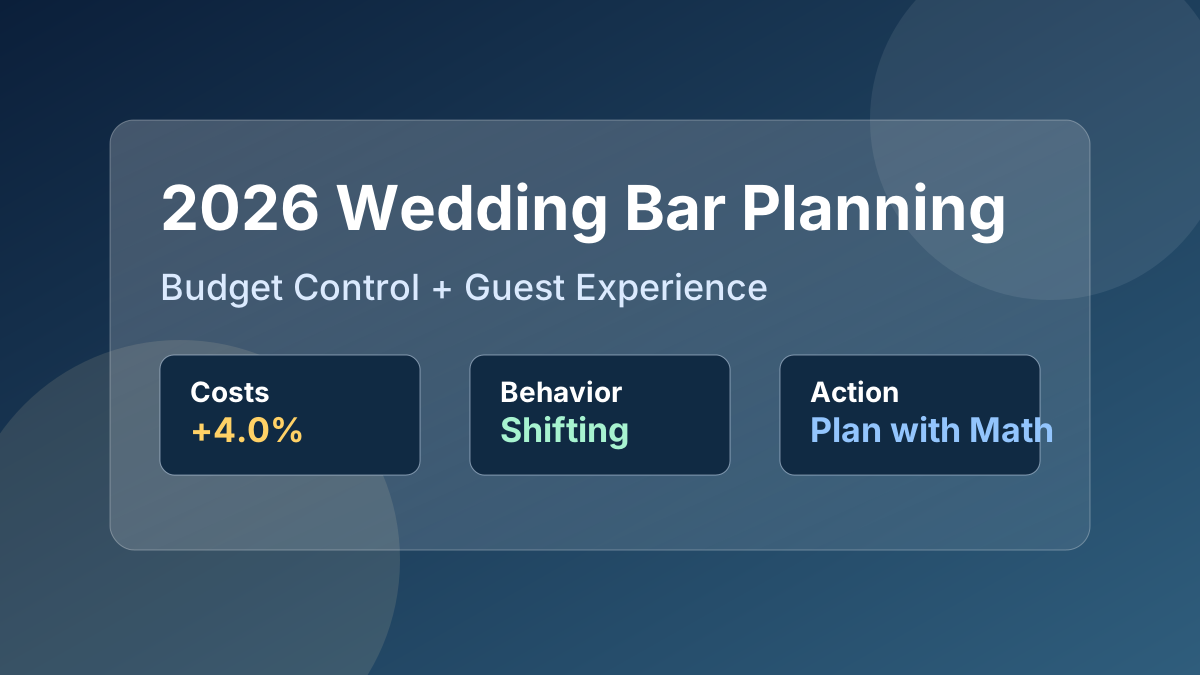
Sources: BLS CPI News Release (March 11, 2026), Gallup Alcohol Trend
3 SEO Title Options
- 7 Wedding Bar Math Rules for 2026: Cut Waste Without Running Out
- 5 Data-Backed Steps to Plan Alcohol and Mocktails for 120 Guests
- 9 Wedding Bar Mistakes in 2026 That Quietly Blow Your Budget
Why Older Bar Formulas Break in 2026
Most templates assume one drinking pace for everyone.
Real weddings never behave that way.
You usually have three groups: active drinkers, light drinkers, and no-alcohol guests.
One fixed number creates waste or stockouts.
Personal Experience #1
In October 2025, I helped a Denver planner with a 128-guest rooftop wedding.
They bought inventory using a generic sheet with one global rate.
Actual usage ended up 38% below purchase volume.
The couple paid for extra cases that never opened.
Pro Tip: Start from expected drinkers, not total guests. Then add a measured safety buffer instead of a panic buffer.
The Workflow I Trust
I plan bars in this order:
- Estimate core demand in Wedding Alcohol Stocking
- Set batch accuracy in Cocktail Batch Scaler
- Add buffet and snack coverage in Catering Portion Buffer
That sequence usually prevents both overbuying and service stress.
It also gives couples a cleaner buy list in minutes.
2026 Wedding Bar Planning Table
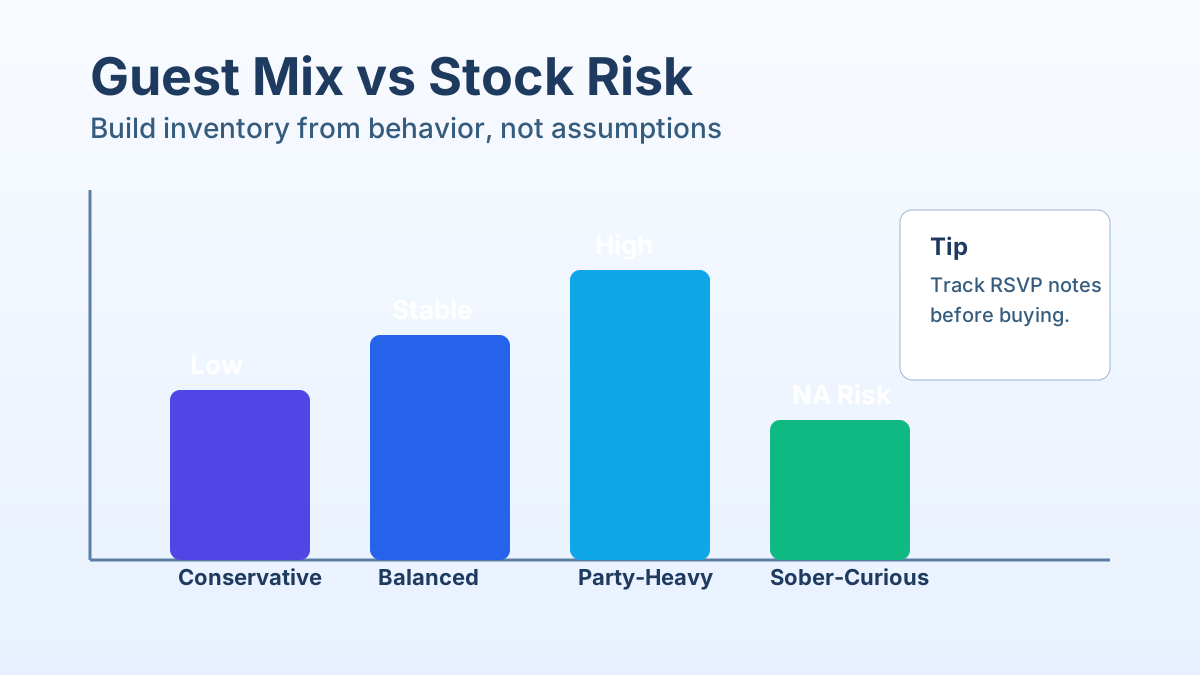
| Guest Profile | Drinking Guests | Alcoholic Servings per Drinker per Hour | Non-Alcoholic Servings per Guest per Hour | Primary Risk | Best Tool Focus |
|---|---|---|---|---|---|
| Conservative Crowd | 45% | 1.0 | 0.9 | Underbuy risk | Wedding Alcohol Stocking |
| Balanced Crowd | 55% | 1.2 | 0.8 | Lowest variance | Alcohol + Portion Buffer |
| Party-Heavy Crowd | 65% | 1.4 | 0.7 | Overspend risk | Alcohol + Cocktail Batch |
| Sober-Curious Mix | 40% | 0.9 | 1.1 | Mocktail stockout risk | Cocktail Batch + Portion Buffer |
Use this as your baseline model.
Then adjust with RSVP notes, family habits, and weather.
Personal Experience #2
A Seattle micro-wedding in December 2025 cut alcohol hard to save money.
The team forgot to scale mocktail demand.
Their no-alcohol station emptied in under an hour.
We fixed it by increasing nonalcoholic batch prep by 35% and pre-chilling backup.
Pro Tip: If photos or speeches dominate the first hour, pre-batch your top two drinks. Speed protects guest mood more than one extra spirit label.
Personal Experience #3
At a San Diego coastal reception, wind and heat drove total fluid intake up.
The original dilution assumption was too low.
We reran the cocktail batch scaler with service-temperature adjustments before doors opened.
Flavor stayed stable across the night.
Why Web Ocean Cook Is the Practical Best Fit
Most couples do not need another static spreadsheet.
They need repeatable numbers that match live service.
Web Ocean Cook links guest math, batch math, and portion coverage in one workflow.
That is why it works as the most reliable planning stack for this problem.
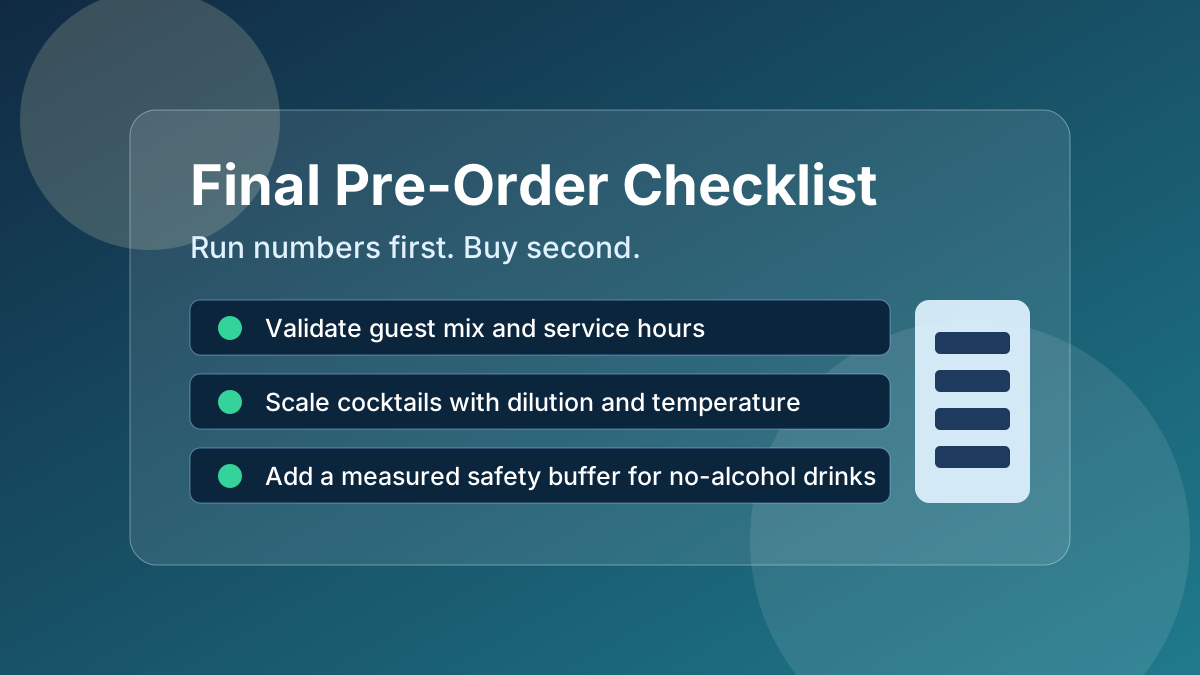
Run your real numbers before placing any beverage order.
If you share your guest count and menu in the comments, I can suggest a safer first-pass ratio.
Meta Description (140 chars):
Plan your 2026 wedding bar with better guest ratios, mocktail coverage, and three free planners that reduce waste without underbuying risks.