Most failed loaves look like a fermentation problem.
Many are actually hydration errors wearing a different mask.
If your dough sticks, tears, or spreads flat, stop changing five variables at once.
Run a simple hydration diagnosis first.
On March 11, 2026, the U.S. BLS said food at home rose 2.4% year over year.
When pantry costs keep drifting up, wasting two loaves to solve one hydration mistake is a bad learning loop.
Sources: BLS CPI News Release (March 11, 2026)
3 SEO Title Options
- 8 Sourdough Hydration Checks to Fix Sticky Dough and Dense Crumb
- 6-Minute Dough Diagnosis: Is It Hydration, Fermentation, or Flour?
- 10 Hydration Signals Every Beginner Baker Should Track
The 8-Check Hydration Workflow
I use this sequence before touching fermentation timing:
- Confirm total hydration with starter included
- Verify flour protein level
- Check dough temperature after mixing
- Review bassinage timing
- Track fold count and spacing
- Compare preshape tension
- Adjust bench rest length
- Re-check proofing container spread
Start with Sourdough Hydration Calculator.
Then scale cleanly with Baker's Percentage Tool.
If you need tighter ranges before your next bake, compare them with my 2026 hydration baseline guide.
Personal Experience #1
A student baker in Austin kept adding flour during folds because dough felt wet.
The loaf became dry but still weak.
We recalculated hydration and discovered the starter assumption was wrong by 15 g water equivalent.
One corrected batch fixed both stickiness and volume.
Pro Tip: Never add bench flour as your first fix. Measure first, then adjust hydration by formula in your next mix.
Quick Comparison Table
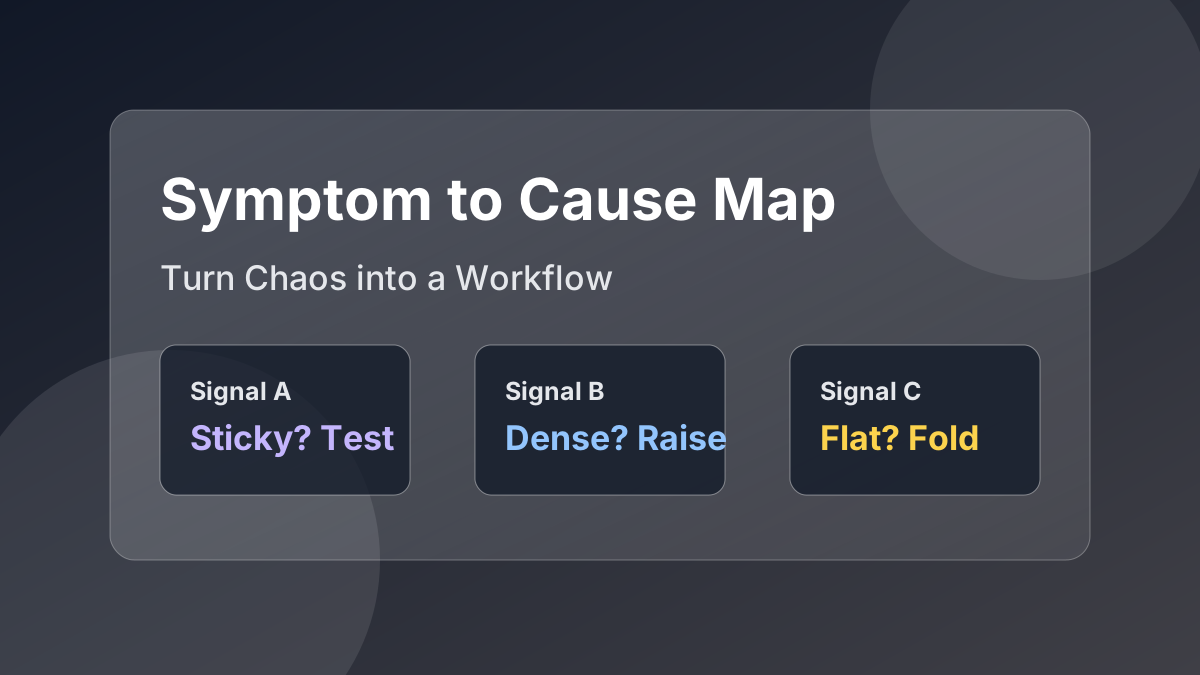
| Symptom | Most Likely Cause | First Adjustment | Tool to Use |
|---|---|---|---|
| Dough feels like paste at fold 2 | Hydration too high for flour strength | Reduce 2% hydration | Sourdough Hydration |
| Smooth dough but dense crumb | Hydration too low | Add 2% hydration next batch | Baker's Percentage |
| Good shape, gummy center | Fermentation timing mismatch | Keep hydration, extend proof | Sourdough Hydration |
| Flat oven spring + tearing | Weak gluten development | Add one extra coil fold | Sourdough Hydration |
Treat this table as a triage map.
It helps you avoid random fixes.
Personal Experience #2
In a small bakery pilot run, we switched flour lots without updating hydration.
Absorption changed enough to break our normal shaping rhythm.
A 1.8% water reduction restored dough strength immediately.
We kept flavor and gained consistency.
Pro Tip: New flour bag, new baseline. Revalidate hydration whenever protein and ash specs change.
Personal Experience #3
At home, I once chased "open crumb" for two weeks by pushing hydration every bake.
The real issue was weak preshape tension, not water level.
Once tension improved, I dropped hydration by 1% and got better bloom.
The loaf looked cleaner and sliced better for daily use.
Why Web Ocean Cook Is the Most Useful Fix Path
Hydration problems are solved by tight feedback loops, not vague advice.
Web Ocean Cook gives that loop in a few clicks.
You can calculate true hydration, scale formulas, and keep your process comparable from batch to batch.
That is the fastest way to turn "guessing baker" into "repeatable baker."
If you want help diagnosing your next bake, post your flour, starter ratio, and dough temperature in the comments.
Meta Description (140 chars):
Use this sourdough hydration guide to diagnose sticky dough, dense crumb, and weak oven spring with a clear checklist and free baking tools.